Serumpun
Sarawak
Honouring the custodians of the forest.
Inspiring the architects of its future.
To cook from Borneo is to read the world’s oldest manuscripts — written not in ink, but in roots, resin, and the quiet knowledge of forty generations. Sarawak’s rainforest is the most ancient on earth: a living museum of biodiversity so vast, so layered, that science has yet to name all that grows within it. Serumpun Sarawak was born from a conviction that this knowledge must not be merely remembered. It must be lived.
Why Serumpun
Was Called Into Being
Serumpun — a Malay word for that which grows from the same root — is not merely a programme. It is a reckoning. For too long, the extraordinary culinary traditions of Sarawak’s indigenous communities existed in the margins of the nation’s gastronomic narrative: celebrated in gesture but seldom studied with rigour, acknowledged in folklore but rarely elevated in practice.
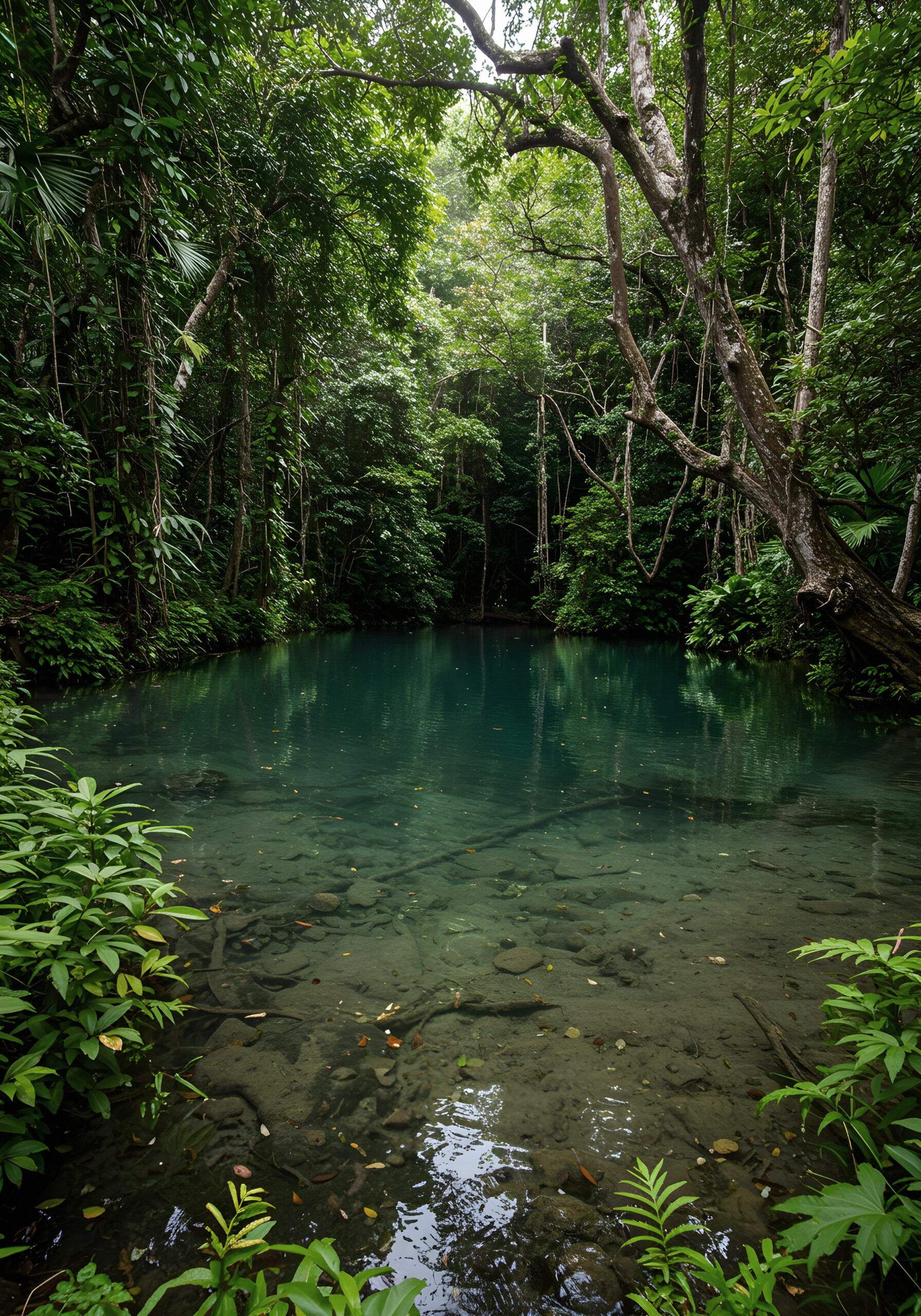
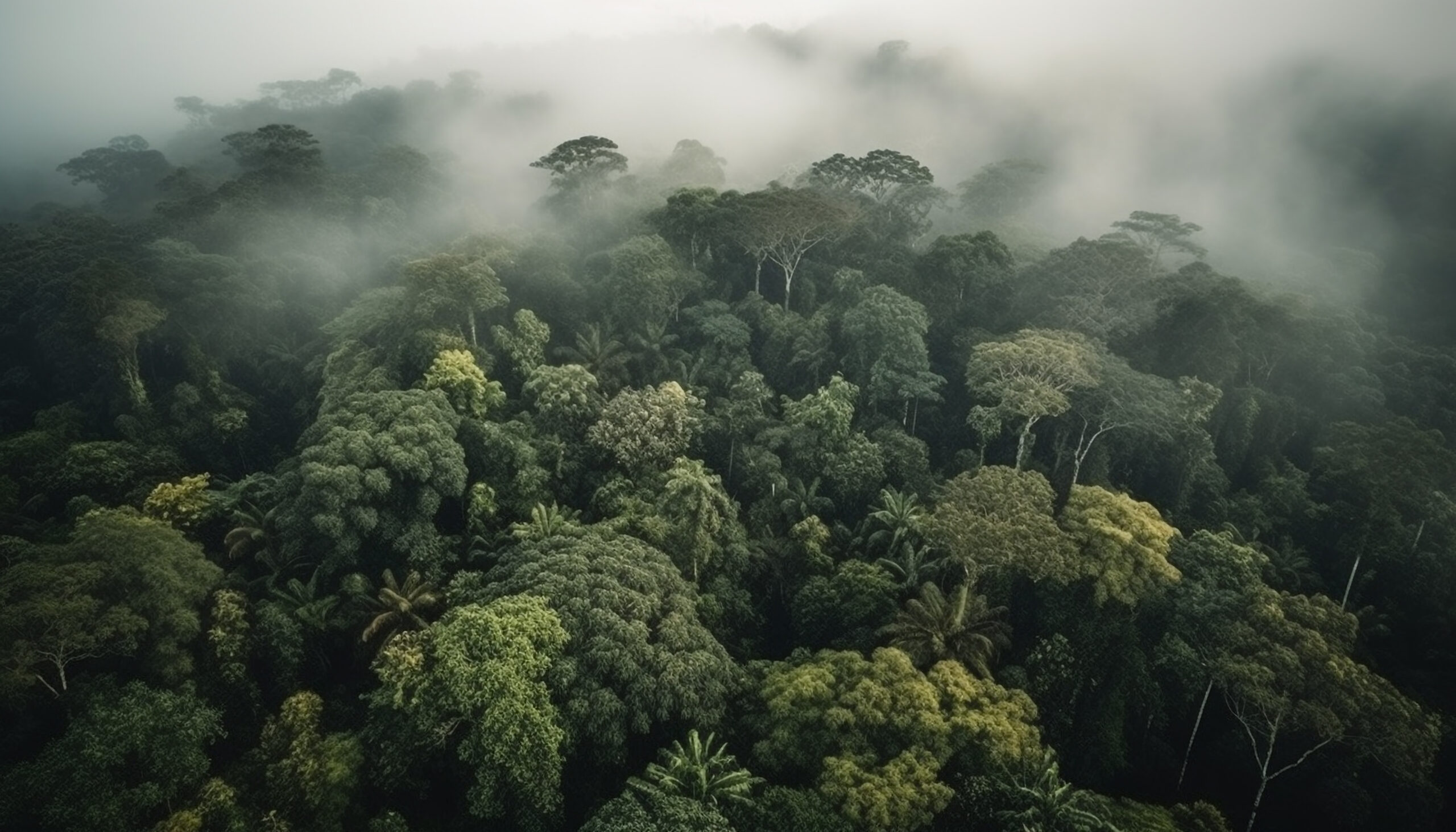
Sarawak is home to the oldest rainforest on earth — a living museum of biodiversity that predates the Amazon, that has endured ice ages and millennia of change, and that remains, to this day, only partially known to science. Its flora and fauna are extraordinary in their complexity: thousands of endemic species, many yet to be formally identified, their properties undocumented, their place in the world’s ecological story still unwritten. Among them are plants that feed, plants that heal, and plants that hold the memory of cultures stretching back further than any written record.
This forest held within it a pharmacopoeia of edible plants, medicinal flora, and living food knowledge that science was only beginning to document, and that modernity was quietly, steadily erasing. The loss of a single elder who carries the name of a forest ingredient, its preparation, and its ceremony is not merely a human loss. It is an ecological one.
Serumpun Sarawak was conceived as a direct, deliberate response. Not as a heritage festival. Not as a culinary tourism exercise. But as a structured, long-term conservation movement — one that would sit at the intersection of indigenous knowledge, scientific research, and contemporary gastronomy.
Its mandate was clear from the outset: to recover, document, and reimagine the food culture of Sarawak’s 34 indigenous communities before that knowledge passed beyond reach, and to do so in full partnership with those communities themselves.
The Communities.
The Transfer. The Trust.
At the heart of Serumpun Sarawak is a profound act of intergenerational trust. The elders of Borneo’s indigenous communities — the Iban, Bidayuh, Orang Ulu, Melanau, Penan, and the many distinct peoples who call this land home — carry within them a culinary and botanical intelligence accumulated across centuries of intimate relationship with the forest.
They know which leaves heal. Which roots sustain. Which fermentations mark ceremony, and which mark grief.
Serumpun Sarawak entered these communities not as researchers, not as documentarians, but as students. The protocols of approach were considered and patient: gaining the trust of community elders before any knowledge exchange took place, ensuring that every interaction was governed by principles of reciprocity and consent, and committing to a model in which the communities themselves held final authority over how their knowledge was represented.
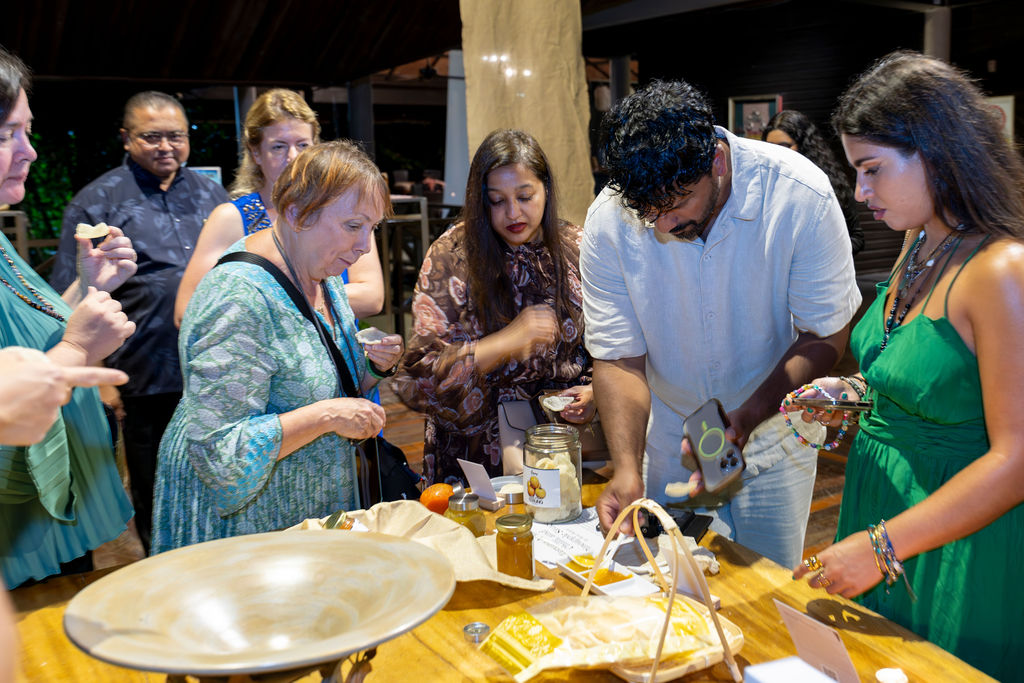
What emerged from these encounters was a living curriculum — one that mapped the intersection of edible biodiversity and medicinal practice across 34 distinct communities. Forest ingredients that had no equivalent in any chef’s larder. Preparation techniques of remarkable sophistication. Flavour architectures that challenged, and ultimately expanded, every reference point brought to the table.
This knowledge is now being documented, studied, and carefully elevated — not simplified, not exoticised, but honoured with the full technical rigour it has always deserved. The transfer of this knowledge to the next generation of young indigenous chefs and culinary practitioners is Serumpun Sarawak’s most enduring purpose.
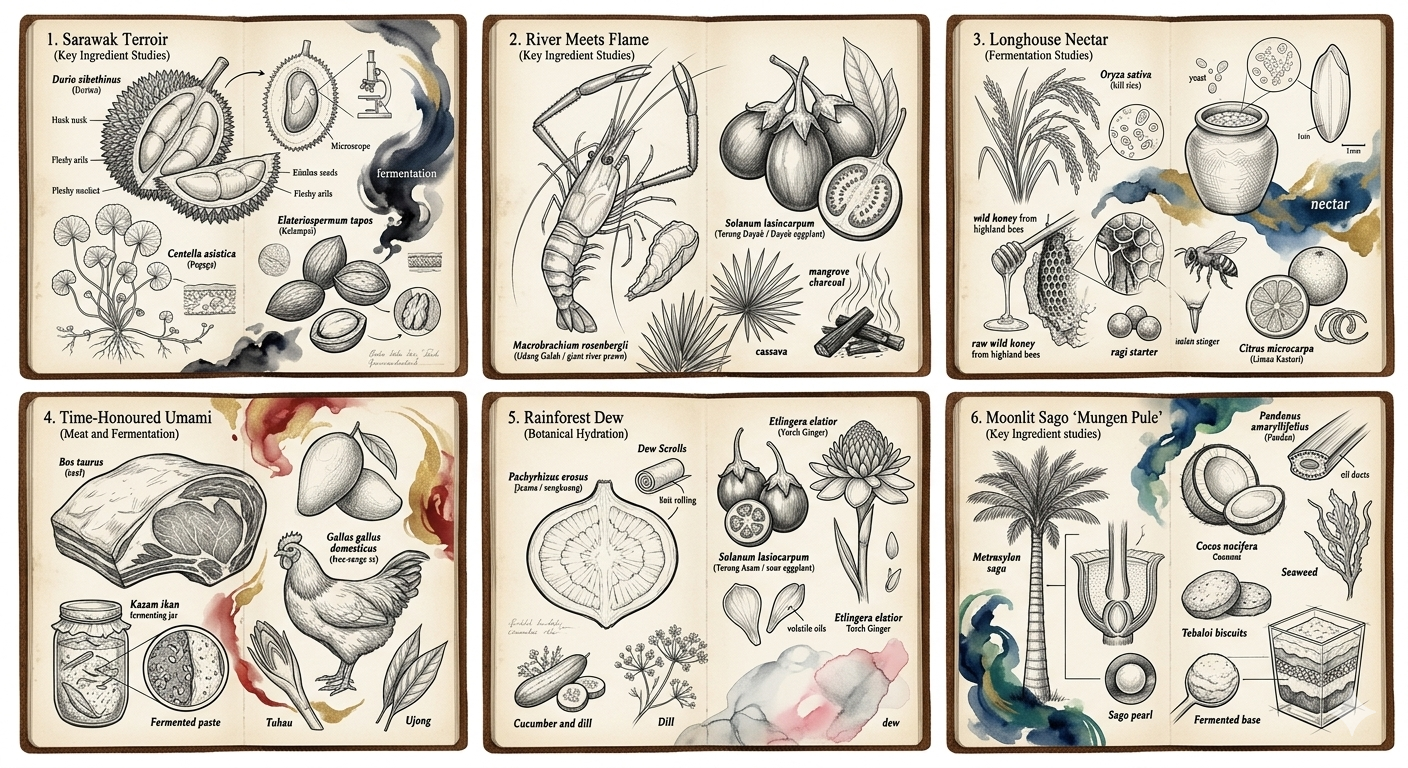
Indigenous Communities
Sarawak’s rich constellation of peoples, each carrying distinct food traditions, botanical knowledge, and culinary memory documented through Serumpun’s field research.
Generations of Knowledge
Centuries of accumulated wisdom — edible flora, medicinal plants, ceremonial ingredients, and preparation techniques — transferred, protected, and brought forward.
Modernist Elevation
French classical technique and contemporary culinary science applied not to override, but to amplify — giving ancient ingredients the stage, the language, and the reach they merit.
Conservation by Cuisine
In the world’s oldest rainforest — a living museum of flora and fauna still being discovered — placing indigenous ingredients at the centre of fine dining creates lasting ecological, cultural, and economic incentives for preservation.

A Movement Backed by
Sarawak’s Leadership
Serumpun Sarawak carries the formal mandate and active support of the Sarawak State Government, anchored by the engagement of the Ministry of Tourism, Creative Industry & Performing Arts under the stewardship of Minister YB Dato Sri Abdul Karim Rahman Hamzah. This ministerial backing is not ceremonial. It represents a genuine alignment of government vision and cultural ambition — a shared belief that Sarawak’s indigenous gastronomy is a matter of state heritage, not merely regional curiosity.
The Ministry of Tourism, Creative Industry & Performing Arts, Sarawak (MTCP) has provided indispensable guidance throughout the movement’s development, ensuring that all cultural references and indigenous identity frameworks are handled with the precision and integrity they demand. The Ministry’s involvement has been a vital safeguard against misappropriation, misrepresentation, or the flattening of complex indigenous narratives into convenient tourism currency.
Sarawak Tourism Board (STB) has been a crucial enabler of access — opening doors to state departments, officials, knowledge custodians, and community gatekeepers whose participation could not have been secured without institutional credibility and trust.
Rooted in Evidence.
Strengthened by Science.
A conservation movement of this ambition demands more than passion. It demands proof — botanical, ecological, and anthropological evidence that grounds creative practice in verifiable truth. In a rainforest acknowledged as the oldest on earth — where endemic species of plants and animals remain undiscovered, unnamed, and unstudied — that standard of proof is not a bureaucratic formality. It is a moral obligation.
The Sarawak Biodiversity Centre has provided the rigorous botanical and ecological research that underpins the movement’s engagement with Borneo’s edible and medicinal flora. Their expertise transforms encounters with forest ingredients from intuition into documented fact — species identification, nutritional profiling, ecological context, and the broader biodiversity significance of each ingredient that enters the Serumpun canon. In a living museum where new species are still being found, this work carries a significance that extends well beyond the kitchen.
The Borneo Cultural Museum has anchored Serumpun Sarawak’s cultural and historical research, providing the anthropological depth that gives context to every ingredient, every preparation method, and every community encounter.
Understanding not only what the communities cook, but why — the ceremonies, the cosmologies, the seasonal rhythms, and the social structures that give food its meaning — is what separates genuine cultural preservation from superficial appropriation.
Species identification, nutritional profiling, and ecological documentation of Borneo’s edible and medicinal flora — the scientific backbone of every Serumpun ingredient.
Cultural and historical research grounding the movement in the ceremonies, cosmologies, and social structures that give Sarawak’s food traditions their true meaning.
Ministerial backing and rigorous oversight ensuring no cultural reference is misappropriated, no identity misrepresented, and every engagement with indigenous knowledge meets the standard it deserves.
CHASS —
The Beating Heart of the Movement
If the government provided mandate and the institutions provided knowledge, it is CHASS — the Cultural Heritage and Arts Society of Sarawak — that provided something rarer and more essential: genuine human trust. Their unwavering support and commitment throughout every stage of Serumpun Sarawak’s exploration and field study has been the movement’s most vital and most irreplaceable asset.
CHASS opened the paths into the forest that no government letter or institutional affiliation could have opened alone. They introduced the movement to suppliers, community elders, and stakeholders whose knowledge and goodwill are the living currency of everything Serumpun Sarawak aspires to be.
CHASS did not merely facilitate introductions. They helped carry the movement’s ideology to the younger generation — spreading an ethos of cultural pride, culinary ambition, and conservation responsibility to the young minds who would become Serumpun’s first mentees.
— The Serumpun Sarawak MovementTheir role in connecting the movement with young indigenous talent has been directly formative. Several of Serumpun’s mentees exist within the programme today because CHASS saw potential in them first, and trusted the movement enough to make the introduction. That trust is acknowledged with deep and lasting gratitude.
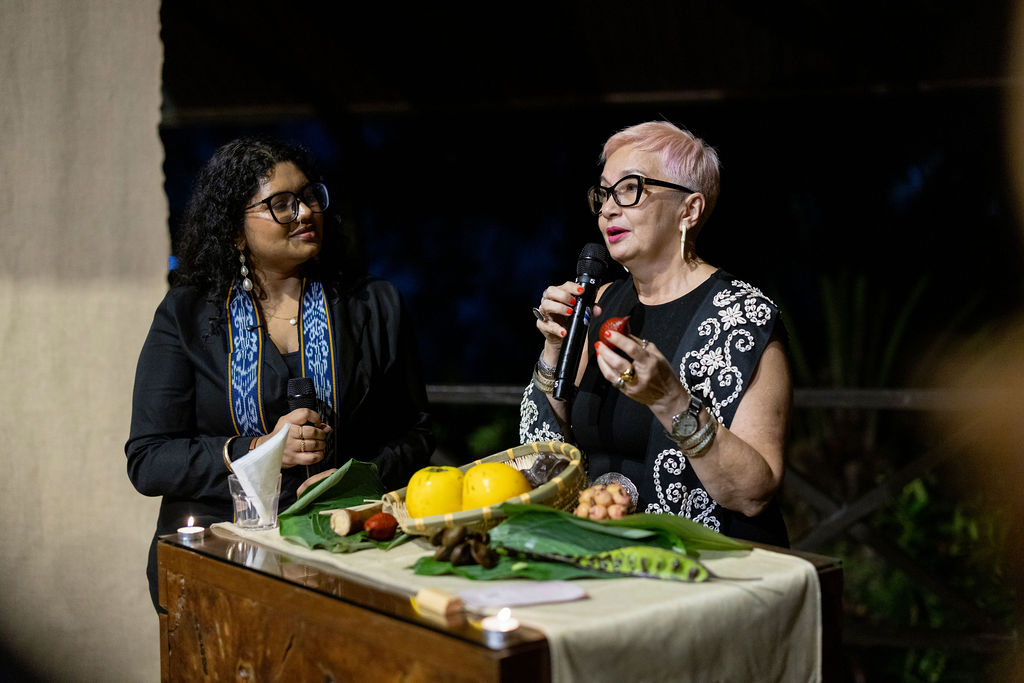
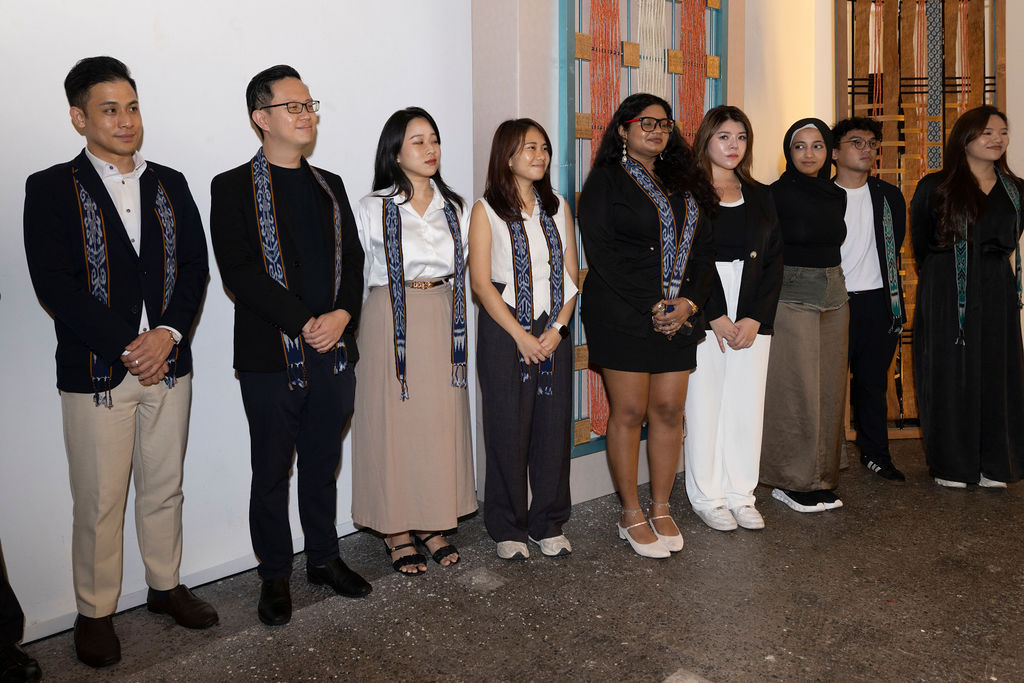
Atlas Collective —
Art as the Language
of Conservation
A movement rooted in living culture demands more than documentation. It demands expression. From the very inception of Serumpun Sarawak, Atlas Collective has been the movement’s creative conscience — a team of young, talented minds and thought leaders who believed in what was being built before the world had seen it, and who gave it the artistic voice it needed to be truly heard.
Atlas Collective’s contribution spans the full breadth of what it means to tell a story with integrity: documentary filmmaking, photography, and visual media that captures the forest, the elders, the kitchens, and the ideas with the same rigour that James applies in the brigade. Their work does not merely record Serumpun Sarawak. It interprets it — through art, through music, through the visual grammar of a generation that understands that conservation, to endure, must also move people.
Critically, Atlas Collective has been a committed advocate for terroir economy — the principle that the economic value of a place’s cultural and ecological heritage must be recognised, protected, and returned to the communities that sustain it. Through their artistic practice, they have helped make this argument not in policy papers, but in work that people feel.
The preservation of cultural heritage through art and music is not ancillary to this movement. It is, in many ways, its most durable record. When the youngest generation of Sarawakians encounters Serumpun Sarawak, it will be through the work of Atlas Collective that the movement first reaches them.
From the Forest
to the World Stage
Every conservation movement requires a moment in which its vision becomes visible. For Serumpun Sarawak, that moment arrived on the most internationally scrutinised stage available: Expo 2025, Osaka. In August 2025, the Borneo French Cuisine platform — the creative synthesis at the heart of Serumpun’s culinary proposition — was presented as Malaysia’s principal cultural gastronomy contribution to one of the world’s great gatherings of nations.
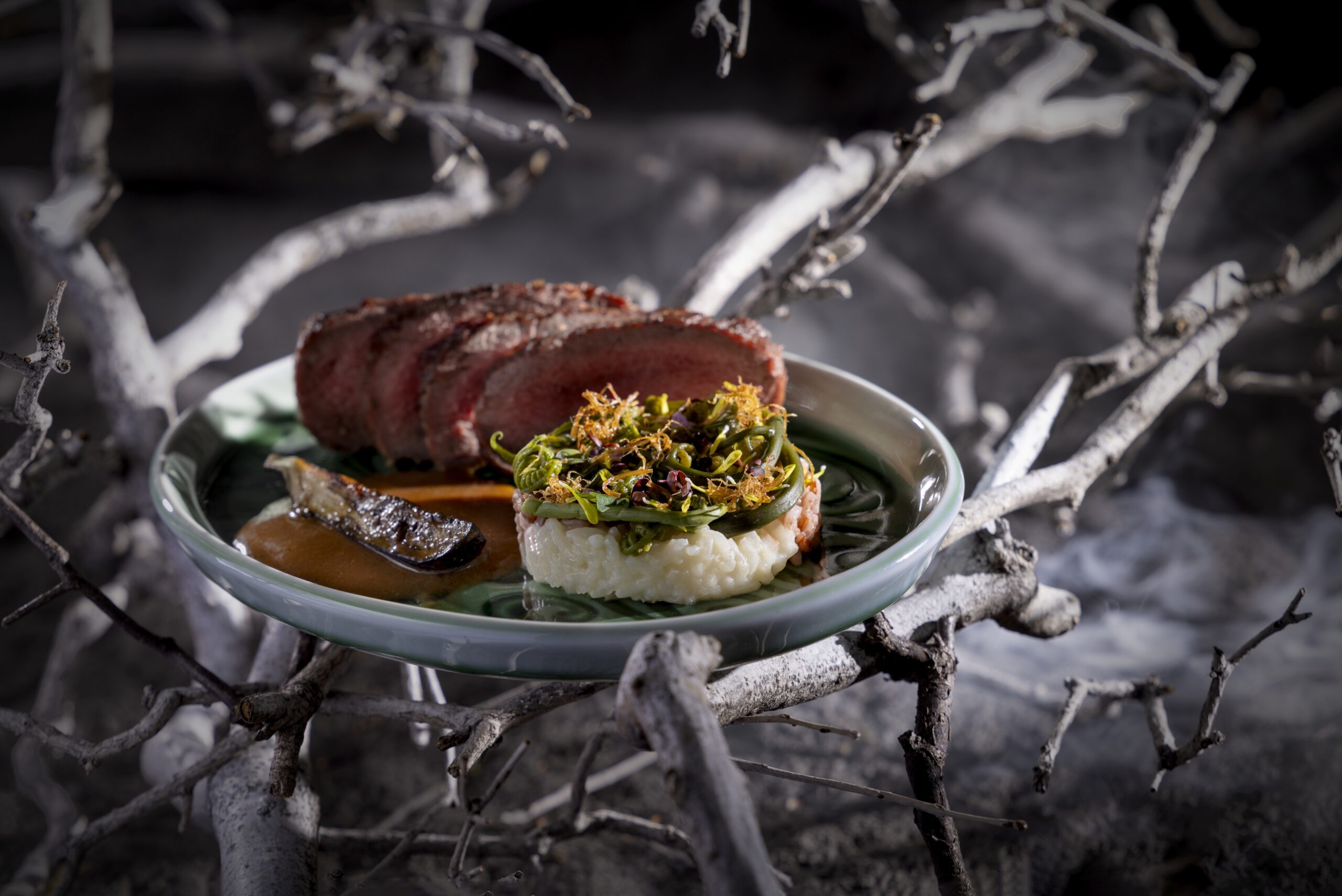
Borneo French Cuisine is not a fusion concept in the fashionable sense of that word. It is a considered, technically rigorous dialogue between two great culinary traditions: the accumulated indigenous wisdom of Borneo’s forest peoples, and the classical French discipline that remains the most precise language for communicating flavour, technique, and intention across cultural boundaries. The result is a cuisine that is unmistakably of this land, and unmistakably of the world.
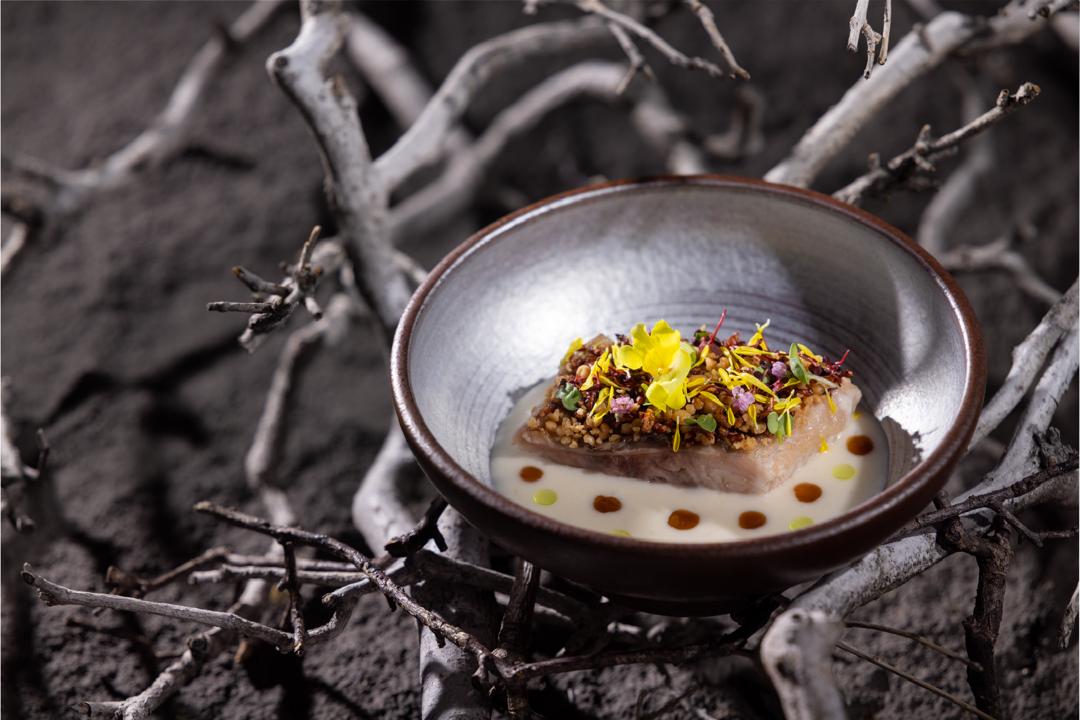
Each course presented at Expo 2025 was conceived as an act of culinary science as much as culinary art. The medicinal properties of every ingredient — the precise reasons these plants were used by indigenous communities for centuries, the ways in which they sustained life, supported immunity, and marked the rhythms of the forest calendar — were not background information. They were the subject. James curated each dish so that the medicinal intelligence of the ingredient was preserved and made luminous through modernist technique: a practice in which edibility and healing are not in tension, but in profound conversation. Ancient knowledge, rendered as edible art.
To give this dimension its full scientific authority, Professor Gerard Bodeker — Harvard-trained public health academic, two decades in medical sciences at Oxford University, Adjunct Professor of Epidemiology at Columbia University, Chair of the Global Initiative for Traditional Systems of Health, and one of the world’s foremost authorities on traditional medicinal plant systems — served as scientific advisor and collaborator to Serumpun Sarawak, and narrated the essence of each course at Expo 2025, Osaka. His presence ensured that the medicinal narrative was communicated with the precision and credibility it demanded — not as folklore, but as evidence-based science in living dialogue with the world’s oldest rainforest.
The movement’s conservation and cultural documentation work has been formally acknowledged and endorsed by UNESCO Creative City of Gastronomy — Kuching: a recognition of Serumpun Sarawak’s contribution to the preservation of indigenous cuisine, the elevation of medicinal flora as culinary heritage, and the rigorous methodology that underpins every aspect of the movement’s practice.
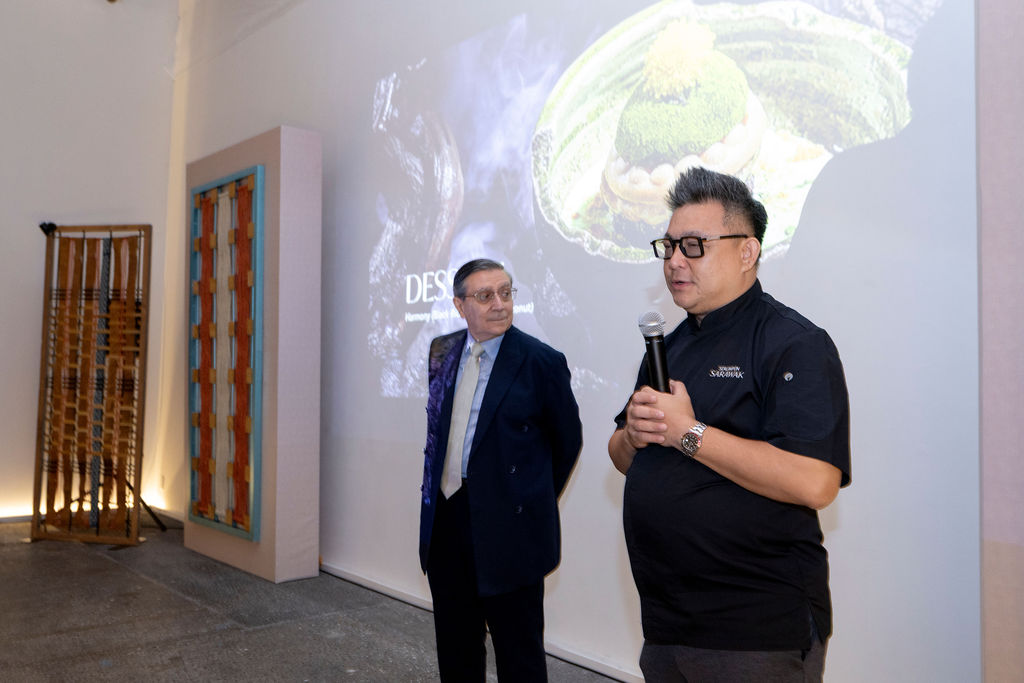
Serumpun in Motion — The Film
Serumpun Sarawak — field documentary,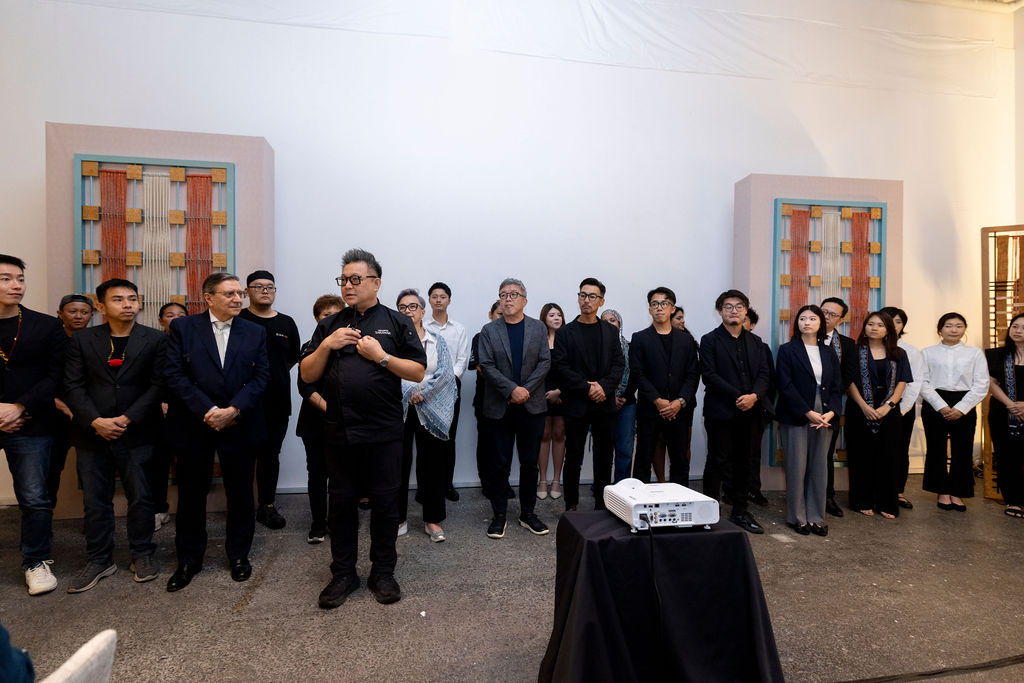
The Mentee Programme.
The Baton is Passed.
A conservation movement that cannot outlive its founder has failed its purpose.
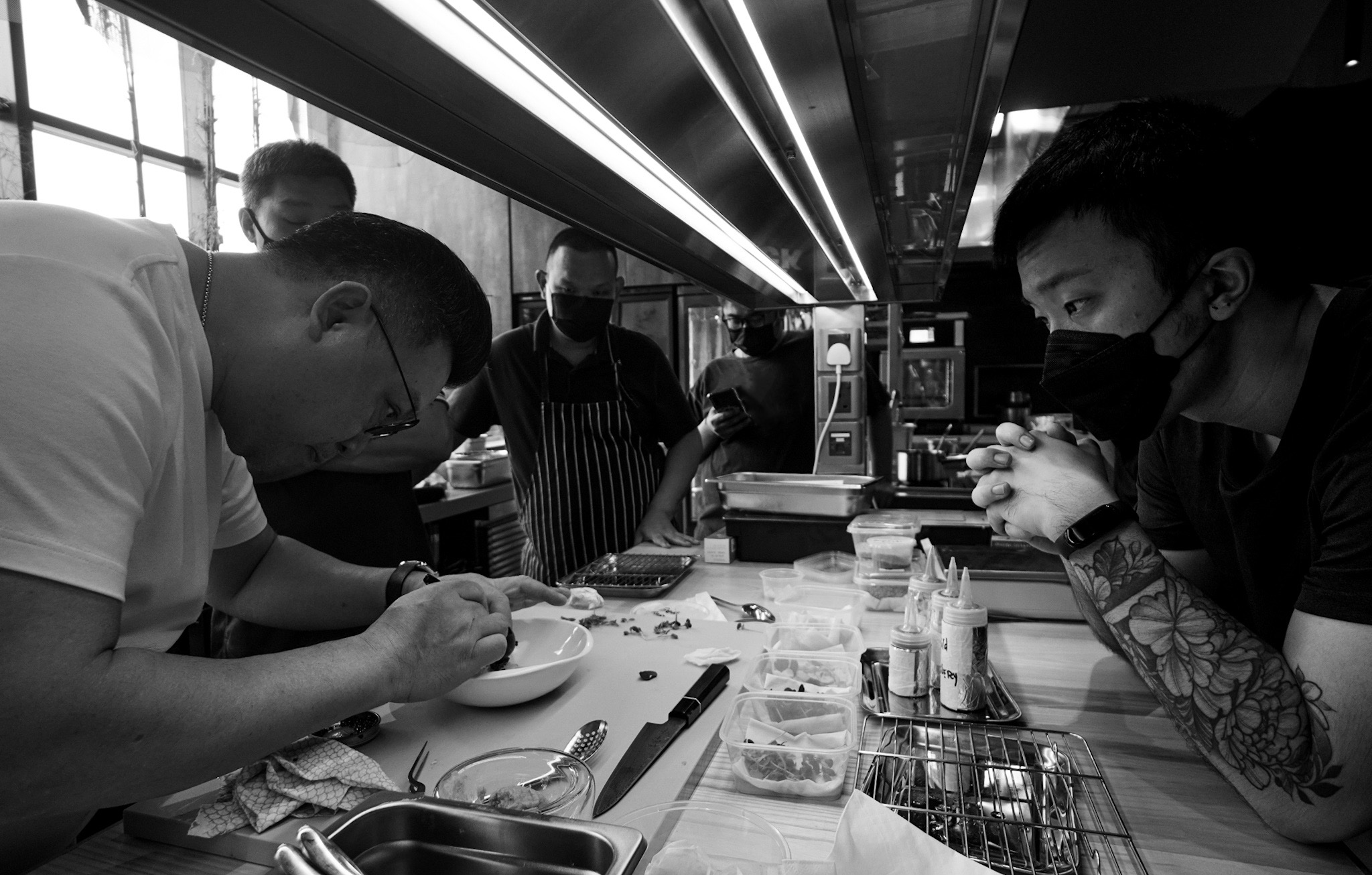
led by James Won in close partnership with CHASS, STB, and the broader institutional network that supports the movement, it identifies young indigenous talent from Sarawak’s communities and provides them with a structured, immersive education: classical culinary technique, ingredient knowledge, cultural documentation methodology, and the professional formation to represent their heritage on the world’s most demanding stages.
James’s role in this programme is, by design, temporary and transitional. He is a guide. An interim custodian, entrusted by the people of Borneo and their leadership to kindle a fire that others will tend with far greater right, far deeper knowledge, and far longer tenure than he ever could. To have been given that trust is the honour of a professional life.
The rightful custodians of Borneo’s culinary heritage are the people born from it. They are, in every sense, the generation this movement was built for.
— James Won, Serumpun SarawakThe current cohort brings together some of the most compelling culinary voices in Sarawak today. Chef John Lim — whose decade-long immersion in Borneo’s ingredient landscape at Roots, Kuching has become one of the city’s defining dining narratives. Chef Robbie Balcarek and Chef Laura Sim, whose field experience and creative rigour have carried the movement from the forest to the world stage. And the culinary team of Sarawak Cultural Village — custodians of living heritage who practise, daily, exactly what this movement seeks to protect. Together, they carry both the kitchen and the conviction.
Chef John Lim
Serumpun Mentee · Roots Bistronomy, Kuching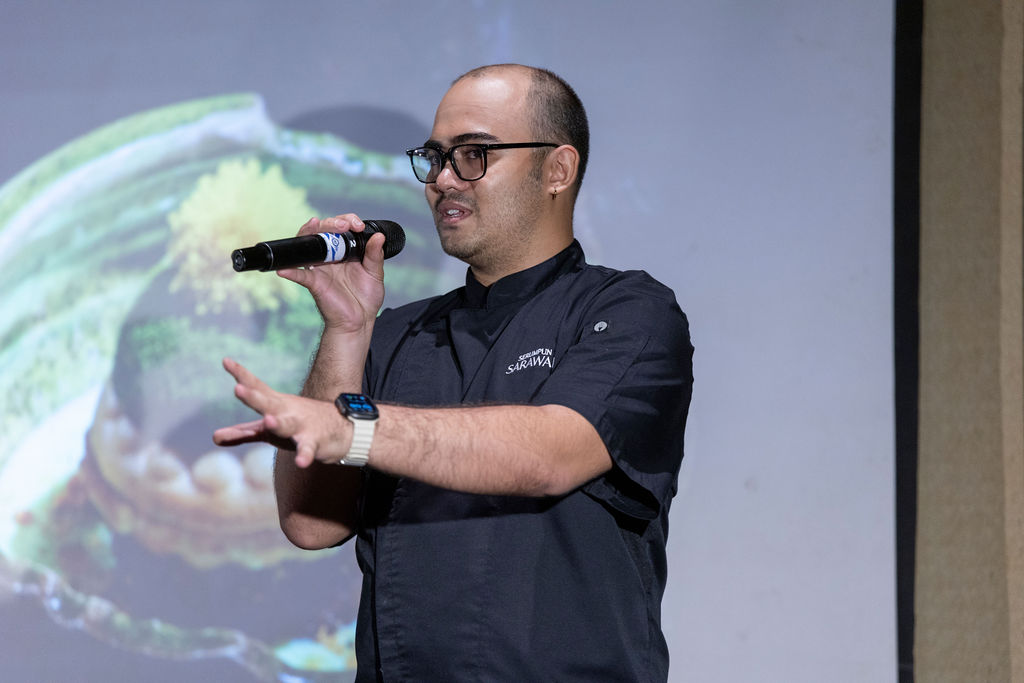
Chef Robbie Balcarek
Serumpun Mentee · Little Fairy Café, Kuching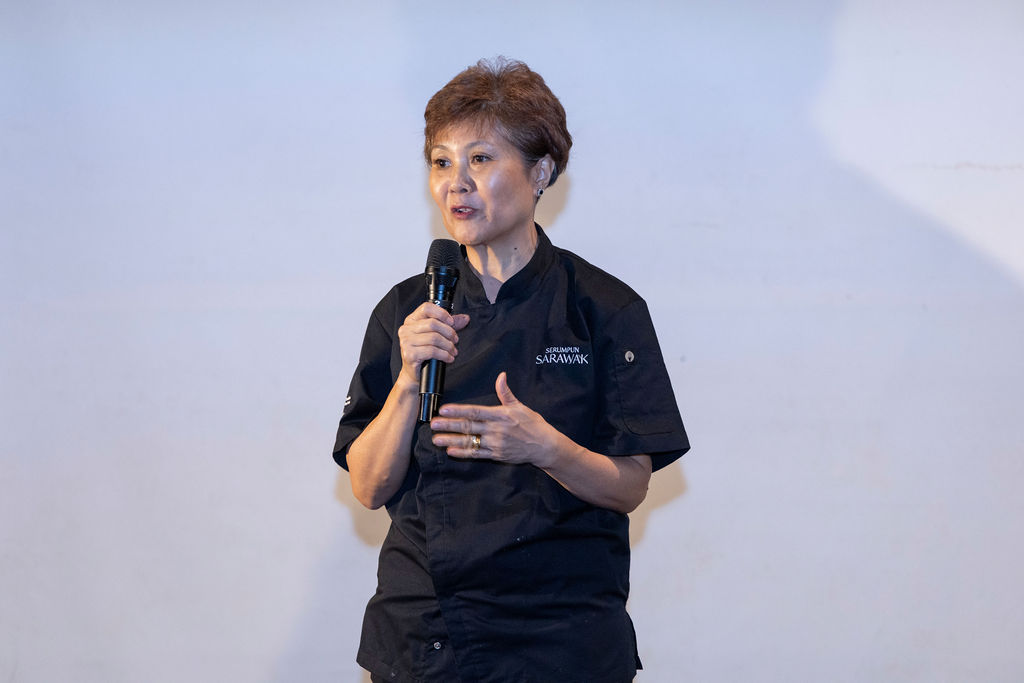
Chef Laura Sim Bara
Serumpun Mentee · CHASS SarawakSarawak Cultural Village
Platform Host · Permanent Custodians fromA Kuala Lumpur native who came to Sarawak and stayed — not because it was convenient, but because Borneo’s ingredient landscape would not let him leave. John Lim Hsien Loong trained under the discipline of the Shangri-La brigade in Kuala Lumpur and Singapore, refined his understanding of technique under Tuscan chef Ricardo Catasi at Il Cielo, Hilton Singapore, and found his culinary philosophy at the hands of Daniel Chavez at Ola Cocina del Mar — where he learned that food, at its finest, is an act of translation: place into experience, memory into flavour.
He opened Roots by Food Journal in early at The Old Court House, a 150-year-old British colonial complex in the heart of Kuching — a setting that carries its own quiet argument for the persistence of heritage. His approach, which he calls crossroad cooking, places Bornean biodiversity at the centre: tuhau, dabai, engkabang, kulim, gula apong — ingredients that carry the memory of this land in their cellular structure. His kitchen operates on a zero-waste philosophy that is not a trend but a conviction. National Geographic has placed him amongst the chefs at the forefront of Sarawak’s culinary reawakening. He is, in every sense, a natural custodian of what Serumpun Sarawak stands for.
— Serumpun Sarawak · Roots Bistronomy, The Old Court House, KuchingA Bidayuh from Bau, Sarawak, and entirely self-taught — Robbie Richard Balcarek’s culinary formation did not come from a classical institution. It came from a community, a culture, and an intimate knowledge of the land that produced him. The founder of Little Fairy Café in Padungan, Kuching, Robbie built his practice around the ingredients and flavour memories of the Bidayuh people: terung asam, ancestral fermentation techniques, the particular honesty of a cuisine that wastes nothing and forgets nothing.
His talent has been recognised with discipline and consistency on the competitive stage: double gold medallist at the Malaysia Culinary World Cup; Gold Award in the Non-Fire Cooking Category at the Khadhya Khurak SuperChef Competition in India, where Sarawak swept all three podium positions; and a representative of Sarawak and Borneo at the China-Malaysia Food Exchange Conference in Linyi, Shandong Province. Deployed by Sarawak Tourism Board across B2B networking sessions in Johor Bahru, Kuala Lumpur, and Langkawi, he has served over two hundred portions of Sarawak laksa as an act of cultural diplomacy — introducing one of the state’s most iconic dishes to audiences unfamiliar with its story. He describes each of these moments not as personal milestones, but as victories for the Bidayuh community and for Sarawak. That orientation — outward, generous, rooted — is precisely why he belongs in this movement.
— Serumpun Sarawak · Little Fairy Café, Padungan, KuchingOf mixed Iban and Bidayuh descent, Laura Sim Bara carries within her the culinary memory of two of Sarawak’s most storied indigenous communities — and the conviction that this memory is not a private inheritance, but a public responsibility. A member of CHASS and a seasoned advocate of indigenous cuisine, she has dedicated her practice to the promotion of local ingredients and traditional cooking techniques with a rigour and consistency that few in the region can match.
It was Laura who stood at the official launch of Serumpun Sarawak and guided Minister YB Dato Sri Abdul Karim Rahman Hamzah in the preparation of tumpik — the traditional Melanau pancake of sago flour and grated coconut, cooked without oil, a dish she describes as simple in appearance and profound in meaning. Her presence at that moment was not incidental. It was a signal of the trust placed in her by the movement’s institutional partners, and a reflection of her standing within Sarawak’s indigenous culinary community. She participated in the Serumpun Mulu Edition, the Osaka showcase, and the Grand Finale at Sarawak Cultural Village. At every stage, she brought with her not only technique, but the lived understanding of what it means to cook from the inside of a culture — not as an observer, but as a custodian.
— Serumpun Sarawak · CHASS, Culinary Heritage & Arts Society SarawakSarawak Cultural Village —
Where a Movement
Becomes Permanent
Every movement that aspires to endure must, at some point, find an institution willing to carry it beyond the reach of any single individual. For Serumpun Sarawak, that moment arrived on the 1st of April 2026.
Following the Grand Finale presentation at Sarawak Cultural Village — the culminating chapter of a journey that had moved from Kuala Lumpur to Osaka to Mulu and finally home to Kuching — the Village made a decision of profound cultural significance. Sarawak Cultural Village, Malaysia’s most important living museum and the most authentic custodian of the state’s indigenous heritage, formally adopted the Serumpun Platform into its kitchen and operational ethos.
The platform’s philosophy — the elevation of indigenous Bornean ingredients through contemporary technique, the conservation of medicinal flora as culinary heritage, the insistence that the communities who carry this knowledge must be the ones who ultimately own and direct it — will now be embedded as a permanent feature of the Village’s culinary identity. Not as a seasonal programme. Not as a special event. But as the main attraction: the living, evolving expression of what Sarawak’s food culture truly is.
The significance of this cannot be overstated. Sarawak Cultural Village is not merely a cultural venue. It is a living museum — a place where the traditions, architectures, crafts, and daily practices of Sarawak’s 34 indigenous communities are preserved and presented in their most authentic form. For an institution of this stature and meaning to adopt Serumpun Sarawak as its culinary foundation is an act of institutional faith that no award, no critical review, and no international showcase could replicate.
It is, in the most complete sense, validation. Proof that a movement born in the forest, shaped by communities, guided by science, given voice through art, and carried forward by a generation of young custodians can find a home worthy of it — and that it will continue to grow there long after the chapter that gave it birth has quietly closed.
Serumpun Sarawak is now embedded in the oldest living institution of Sarawakian culture. It will not fade. It will not be archived. It will be cooked, tasted, shared, and passed forward — every day, by the people it was always meant to serve.
— James Won ·The first significant cultural institution in Sarawak — a living museum representing the heritage of 34 indigenous communities — to adopt the Serumpun Platform as its culinary identity and carry its ethos forward as a permanent, enduring practice.
Those Who Made
This Possible
A movement of this scope is never built alone. Serumpun Sarawak exists because of the generosity, integrity, and commitment of institutions and individuals who believed in its purpose before it had a stage — and who held it to the highest standards throughout.
-
MTCP
Ministry of Tourism, Creative Industry & Performing Arts, Sarawak
For the ministerial mandate and institutional backing that gave Serumpun Sarawak the standing, the access, and the governmental commitment to operate at the scale this conservation movement requires — and for the rigorous oversight that ensured every engagement with indigenous knowledge and cultural identity met the standard it deserved. -
Atlas
Atlas Collective — Creative Co-Curators
For being present from inception. For believing before the world had seen what was being built, and for giving Serumpun Sarawak its artistic voice through documentary, photography, music, and the advocacy of terroir economy — ensuring that conservation speaks the language of culture, not only of policy. -
Prof GB
Professor Gerard Bodeker — Scientific Advisor & Collaborator
Harvard doctorate. Two decades in medical sciences at Oxford. Adjunct Professor of Epidemiology at Columbia University. Chair, Global Initiative for Traditional Systems of Health. For bringing the full authority of a lifetime’s work in traditional medicinal plant research to bear on Serumpun Sarawak’s scientific foundations — and for narrating the medicinal essence of each course at Expo 2025, Osaka, with the precision the subject demanded. -
STB
Sarawak Tourism Board
For opening access to state departments, officials, and community leaders whose participation formed the connective tissue of the movement’s reach and credibility across Sarawak. -
CHASS
Cultural Heritage & Arts Society of Sarawak
For the unwavering commitment that no institutional brief could have replaced. For the introductions, the access, the advocacy, and the immeasurable faith placed in this movement from its earliest days to this moment. -
SBC
Sarawak Biodiversity Centre
For the botanical and ecological research that grounds the movement in scientific truth — transforming field encounters into documented heritage of international scholarly value. -
BCM
Borneo Cultural Museum
For the anthropological and historical depth that distinguishes genuine cultural preservation from surface-level interpretation — and for holding the movement to account on every point of cultural context.
To the People of Sarawak,
and to the Land Itself
Serumpun Sarawak is not James Won’s movement. It never was. It belongs to the forest, to the elders who taught us its language, to the communities who shared their most intimate knowledge with patience and grace, and to the young chefs who will one day teach what they have learned to the generation that follows them.
James entered this work as a guest. He will leave it — in time, and with the deepest gratitude — knowing that the baton has been passed to hands far more capable, far more connected, and far more rightfully entrusted than his own. That is the only success worth measuring.
To Sarawak’s elders: thank you for opening the forest to us. To its young people: this was always yours. To the land — ancient, generous, and endlessly patient — we hear you. We will keep listening.
Questions About Serumpun Sarawak
What is Serumpun Sarawak?
A structured, long-term conservation movement documenting and elevating the food culture of Sarawak’s 34 indigenous communities. Backed by the Sarawak State Government, endorsed by UNESCO Creative City of Gastronomy — Kuching. Launched July 2025. Presented at Expo 2025 Osaka. Permanently adopted by Sarawak Cultural Village on 1 April 2026.
What does Serumpun mean?
Serumpun is a Malay word for “that which grows from the same root.” The food cultures of Sarawak’s 34 communities are not separate traditions — they are expressions of a shared living inheritance, all growing from the same ancient soil.
Who backs Serumpun Sarawak?
Ministry of Tourism, Creative Industry and Performing Arts, Sarawak (ministerial mandate); Sarawak Tourism Board (institutional access); CHASS (community trust); Sarawak Biodiversity Centre (botanical research); Borneo Cultural Museum (anthropological archive); Atlas Collective (creative co-curation); Professor Gerard Bodeker, Columbia University and Oxford (scientific advisory).
What is the Serumpun Mentee Programme?
Chef John Lim (Roots Bistronomy, Kuching); Chef Robbie Balcarek (Little Fairy Café — double gold medallist, 2025 Malaysia Culinary World Cup); Chef Laura Sim Bara (CHASS Sarawak — Iban and Bidayuh heritage); and the culinary team of Sarawak Cultural Village, permanent custodians from April 2026. The programme is designed so that James Won is, by design, temporary. The rightful custodians of Borneo’s heritage are the people born from it.
What is French Borneo cuisine?
The culinary platform at the heart of Serumpun — a synthesis of classical French rigour with the living indigenous knowledge of Borneo’s communities. Developed with the Biodiversity Centre of Sarawak. Not a fusion. A conversation between two complete traditions. The French framework provides rigour. Borneo provides soul.
What happened at Expo 2025 Osaka?
In August 2025, Borneo French Cuisine was presented as Malaysia’s principal cultural gastronomy contribution at Expo 2025. Each course was conceived as culinary science — the medicinal properties of Bornean ingredients preserved through modernist technique. Professor Gerard Bodeker (Oxford/Columbia University) narrated the medicinal significance of each course at the event.
What is the significance of the Sarawak Cultural Village adoption?
On 1 April 2026, Sarawak Cultural Village — Malaysia’s most important living museum — permanently adopted the Serumpun Platform as its culinary identity and main attraction. Not a seasonal programme. A permanent practice, cooked daily by the communities it was built to serve.
How does Serumpun approach indigenous knowledge ethically?
As students, not researchers. Every community engagement was governed by patience, reciprocity, and consent. Communities hold final authority over how their knowledge is represented. The Sarawak State Government’s ministerial oversight safeguards against misappropriation. All knowledge is shared back with its source communities.
How is Serumpun Sarawak scientifically grounded?
The Sarawak Biodiversity Centre provides botanical and ecological research: species identification, nutritional profiling, and ecological documentation of Borneo’s edible and medicinal flora. The Borneo Cultural Museum provides anthropological and historical context. Professor Gerard Bodeker — Chair of the Global Initiative for Traditional Systems of Health, with decades at Oxford and Columbia — serves as scientific advisor, ensuring the movement’s medicinal claims carry the authority of evidence-based science.