
The Art of
Knowing Less
Distilled over decades. Shaped by fire, forest, and the generosity of knowledge holders across Borneo and Peninsular Malaysia.
Restraint.
Intention.
Truth.
Every element on the plate must earn its place. Not through effort, but through necessity. It must contribute to flavour, texture, or the aromatic architecture of the dish — or it does not belong.
This was not always the instinct. Early in the career, the impulse was to accumulate — to layer technique upon technique, element upon element. What changed was time spent far from professional kitchens, in communities where cooking exists without pretence. What remained was a discipline of subtraction: fewer ingredients, deeper intention, greater resonance.
A dish by James Won operates through two or three elements in dialogue. Texture against softness. The brightness of fermentation against the depth of fire. A foraged medicinal flora against the honesty of a single primary ingredient. The plate breathes. Nothing is wasted. Nothing is surplus.
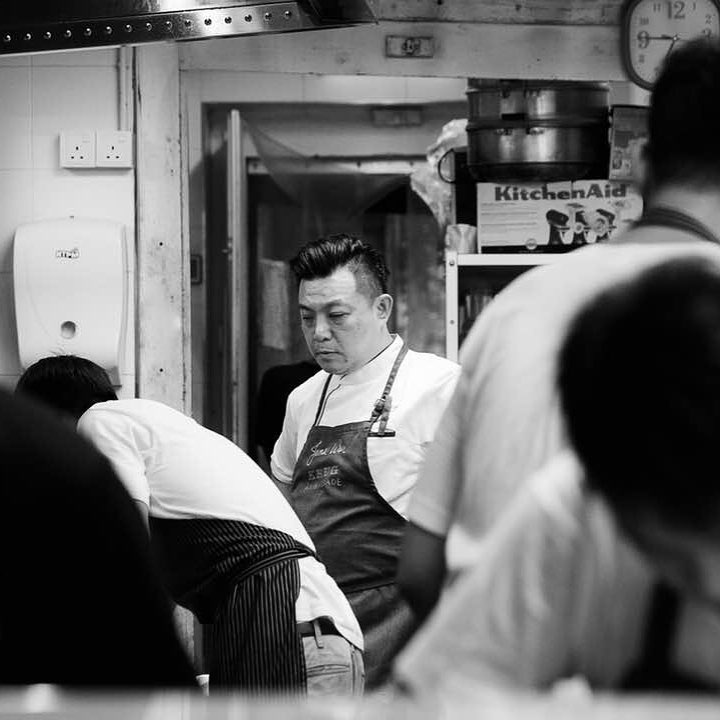
“The plate is not a canvas for self-expression. It is a promise to the person seated before it.”
— James Won


-
Early Career
Building Through Complexity
Classical European foundations. Multi-component plates. The full vocabulary of fine dining explored and understood. This period was necessary — one cannot edit what one has not first written in full.
-
Period of Discovery
The Forest as Teacher
Time spent within the communities of Sarawak and Peninsular Malaysia reordered everything. Cooking guided by season, necessity, and ancestral intelligence produces a clarity no kitchen can manufacture. The lesson was irreversible.
-
Current Practice
Minimal Architecture. Maximum Resonance.
The dish does not explain itself. Restraint is the technique. Every element chosen for what it is, not what it signals.

Ancient Knowledge.
New Language.
Modernist technique does not contradict indigenous practice — it extends it. Where ancestral knowledge teaches the why of a method, the modernist kitchen provides the vocabulary to refine and replicate it with precision. The two are not in opposition. Together they form a complete language.
Curing, fermentation, smoke, and open fire were learnt through sustained time alongside communities across Sarawak and Peninsular Malaysia — absorbed through presence, observation, and trust. The modernist kitchen became the place where these insights were given precision without losing their soul.
Contemporary technique is applied specifically in service of essence: retaining volatile aromatics lost in conventional heat; creating textural contrast that guides the sequence of sensation; sealing the most fugitive flavours within a dish’s architecture. Innovation for its own sake has no place here. Every technique must justify itself through the integrity of the final result.
01 · Ancestral Method
Curing & Preservation
Time itself as ingredient. Salt, ash, sun — the original tools of transformation, learnt from communities for whom preservation is knowledge, not technique.
02 · Living Technique
Fermentation
Depth through patience. Indigenous fermentation traditions across Borneo’s communities reveal what time and microbial intelligence can produce where intervention cannot.
03 · Primal Fire
Smoke & Open Flame
The most honest form of preparation. Char, smoke, and caramelisation — elemental processes that modernist precision can refine but never replace.
04 · Modernist Application
Texture & Encapsulation
Deployed to protect essence: retaining aromatics, creating textural surprise, sealing fugitive flavours. Technology in service of truth, never spectacle.
05 · Foraged Intelligence
Foraging & Cultivation
Medicinal flora, endemic seeds, and wild herbs from Sarawak’s biodiversity corridor extend the flavour vocabulary beyond anything a market can supply.
06 · Aromatic Architecture
Bouquet of Flavour
Fragrance is structure, not ornament. The aromatic bouquet is engineered from provenance, fat, heat timing, and the vessel. It precedes the first bite. It must not be wasted.


French Borneo —
A Cuisine of
Synthesis
French Borneo is not a concept. It is a consequence — the inevitable arrival point of a cooking life shaped equally by classical European rigour and the living, uncodified knowledge of Borneo’s indigenous communities. It could not have been conceived. It had to be earned.
Developed through a sustained research partnership with the Biodiversity Centre of Sarawak and knowledge holders across 34 indigenous communities, the platform brings together endemic flora, ancestral fermentation and curing traditions, and fire-based preparation methods with no precedent in written culinary literature — held within the structural discipline of the French classical tradition.
The French framework provides rigour. Borneo provides soul. The result honours both without diminishing either.
“French Borneo is not a fusion. It is a conversation — between the discipline of the classical kitchen and the living wisdom of the forest.”
— James Won
Consultancy as
Translation
The same discipline that governs a single plate governs a hotel dining concept, an airline menu at First Class standard, a government cultural programme, or an institutional F&B strategy. The scale changes. The question does not: what is the promise to the guest, and does every element keep it?
The French Borneo platform and the philosophy of indigenous knowledge as living culinary intelligence now inform consultancy across the region — embedding cultural integrity, endemic provenance, and conservation thinking into institutions that shape how Malaysia is experienced at the highest levels.
Hotel & Resort Concept
Culinary narrative and menu architecture built from cultural rootedness. Concepts designed to endure, not to trend.
Airline Catering — First Class
Restraint is most valuable when quality must survive altitude and regeneration beyond the chef’s direct control.
Government & Cultural Programmes
Gastronomy as diplomacy. Cuisine embedded into national representation — from World Expo platforms to state dinners.
Institutional F&B Strategy
Premium workplace dining and GLC hospitality elevated to reflect the values and standing of the organisations they serve.
Culinary Cultural Advisory
Biodiversity-anchored menu development, endemic ingredient sourcing, and the ethical representation of Malaysia’s gastronomic heritage.
Conservation Through Cuisine
Every engagement carries responsibility to the communities from which this philosophy was drawn. Their knowledge is the foundation — and must be honoured as such.
Gratitude &
Self-Awareness
None of this was built alone. The philosophy, the platform, the confidence to stand between two culinary worlds — these are gifts from people who had no obligation to give them. Elders who chose to teach. Communities who opened their forests and their fire to a chef who arrived with curiosity.
Self-awareness is not humility as performance. It is the understanding that the knowledge one carries is borrowed, entrusted, and must be returned with care — through integrity of use, through honesty of attribution, and through a sustained commitment to the conservation of the communities and ecosystems from which it came.
I feel honoured and blessed. This awareness is not a sentiment. It is the essence of why conservation matters. To receive knowledge is to accept the duty to protect its source.
- Biodiversity Centre of Sarawak Research Partner
- Indigenous Knowledge Holders — Sarawak 34 Communities
- Datin Sri’ Dona Wee Drury Chairwoman of CHASS
- Chef Robbie Balcarek Serumpun Sarawak
- Chef Laura Sim Serumpun Sarawak
- Ministry of Tourism, Creative Industry & Performing Arts, Sarawak Cultural Custodian
- UNESCO Creative City of Gastronomy — Kuching Sarawak, Malaysia Endorsement
- Prof. Dr. Gerard Bodeker — Columbia University & University of Oxford Academic Collaborator
- Communities of Peninsular Malaysia Living Knowledge
“Every dish carries the handprint of those who taught me. The honour is understood. The responsibility is not forgotten.”
— James Won
Precision.
Legacy.
Roots.
The plate is the final page of a long and grateful education. It carries the rigour of classical French training, the intelligence of Bornean biodiversity, and the soul of communities whose generosity made this cuisine possible.
Every element has earned its place. Every technique has a story. Every dish is a conversation between a chef and the people, forests, and traditions that made his cooking what it is.
James MF Won
Chevalier de l’Ordre du Mérite Agricole
Chevalier de l’Ordre des Coteaux de Champagne
Kuala Lumpur · Borneo · Paris
Questions About Chef James Won’s Cuisine Philosophy
What is Chef James Won’s cuisine philosophy?
Chef James Won’s cuisine philosophy is built on restraint, intention, and truth. Every element on the plate must earn its place through necessity — contributing to flavour, texture, or aromatic architecture, or it does not belong. He moved from complex multi-component plating to minimal architecture: two or three elements in precise dialogue, each chosen for what it is rather than what it signals. This was shaped by time with indigenous communities in Sarawak and Peninsular Malaysia.
What is French Borneo cuisine?
French Borneo is a culinary platform by Chef James Won synthesising classical French rigour with the living indigenous knowledge of Borneo’s communities. Developed with the Biodiversity Centre of Sarawak and knowledge holders across 34 ethnic communities. Not a fusion — a conversation between two complete culinary traditions.
What indigenous techniques does James Won use?
Six techniques: (1) Curing and preservation; (2) Fermentation; (3) Smoke and open flame; (4) Modernist encapsulation; (5) Foraging and cultivation of Sarawak’s medicinal flora; (6) Aromatic architecture — engineering fragrance as structure.
What awards has Chef James Won received?
Chevalier de l’Ordre du Mérite Agricole (France, 2024) and Chevalier de l’Ordre des Coteaux de Champagne (2019) — first Malaysian chef to hold both. UNESCO Creative City of Gastronomy endorsement, Kuching. First Krug Ambassade Chef from Malaysia. First Malaysian Gaggenau Culinary Spokesperson. Inaugural Mepra Brand Ambassador for Malaysia.
What consultancy does Chef James Won offer?
Hotel and resort concept development, airline catering at First Class standard, government and cultural programmes, institutional F&B strategy, culinary cultural advisory, and conservation-through-cuisine programmes.
How did Sarawak shape James Won’s cooking?
Time within the communities of Sarawak and Peninsular Malaysia reordered his approach. Curing, fermentation, foraging, and fire cooking were absorbed through presence and trust of knowledge holders, leading to the French Borneo platform developed with the Biodiversity Centre of Sarawak.
How does he combine modernist and traditional technique?
Modernist technique extends traditional practice. Contemporary techniques are deployed to protect essence: retaining volatile aromatics, creating textural contrast, sealing fugitive flavours. The technique disappears. Only the experience remains.
What is James Won’s approach to conservation?
To receive traditional knowledge is to accept the duty to protect its source. Sourcing from endemic and biodynamic producers, advocating for Malaysia’s gastronomic heritage, and designing menus that create economic value for indigenous communities.
Who are James Won’s knowledge keepers?
The Biodiversity Centre of Sarawak, 34 Sarawak indigenous communities, Datin Sri’ Dona Wee Drury (Chairwoman of CHASS), Ministry of Tourism Creative Industry and Performing Arts Sarawak, UNESCO Creative City of Gastronomy — Kuching Sarawak Malaysia, Prof. Dr. Gerard Bodeker (Columbia University & University of Oxford), communities of Peninsular Malaysia, and Serumpun Sarawak mentees Chef Robbie Balcarek and Chef Laura Sim.
What is his self-awareness philosophy?
Self-awareness is the recognition that the knowledge one carries is borrowed and entrusted, and must be returned with care — through integrity of use, honesty of attribution, and a commitment to conserving the communities and ecosystems from which it came.